
Supreme Court Upholds Parental Rights with Mirabelli Injunction
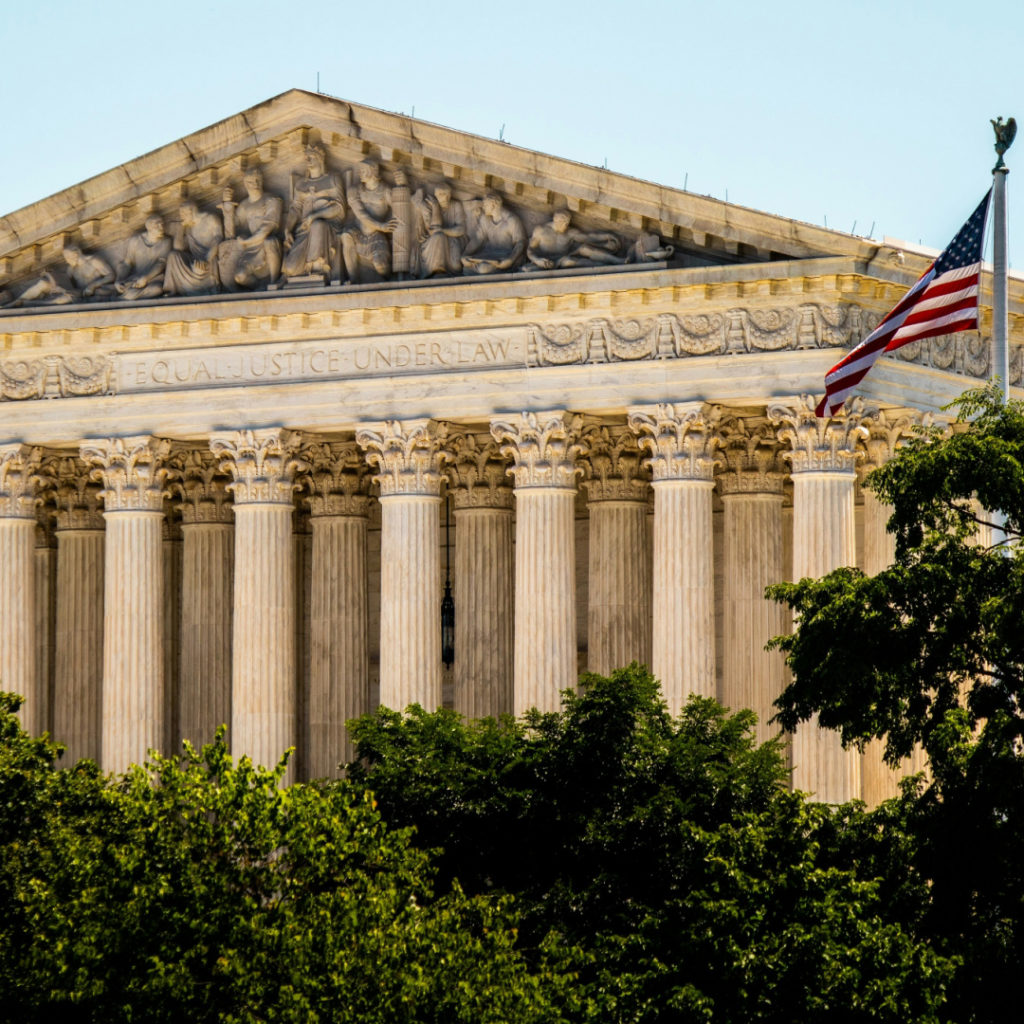
On Monday, March 2, 2026, the United States Supreme Court struck another note in favor of parental rights in its decision to vacate an interlocutory stay order of the Ninth Circuit in the case of Mirabelli v. Bonta.
Yes, that’s a mouthful. And I’ll explain what it all means in a moment, but the TL;DR version is this: The Supreme Court declared that parents who sued California over a state law requiring schools to keep parents in the dark about their children’s gender transitions at school are likely to win their case.
Background
The case of Elizabeth Mirabelli, et al. v. Rob Bonta, Attorney General for California, et al began in 2023 in the U.S. District Court for the Southern District of California. Two teachers sued California over a state law requiring them to socially transition gender-confused children and keep that information from the children’s parents. Over the course of the case, parents were added to the list of plaintiffs as well, suing out of concern that their constitutionally protected parental rights were being violated.
That District Court, after discovery, “granted summary judgment for all plaintiffs and entered a permanent injunction in their favor,” according to this week’s Supreme Court decision. That is, California’s law could no longer be enforced.
California appealed.
On appeal, the Ninth Circuit granted California’s motion to stay (halt) the injunction pending appeal. Their decision would allow enforcement of the law while the full appeal could take place.
When the Ninth Circuit stayed the injunction, the plaintiffs—parents and teachers—filed an application to the U.S. Supreme Court to vacate the Ninth Circuit’s ruling and restore the injunction, again pending appeal.
Finally, the Supreme Court granted the petition, and the California law is once again put on hold.
Signals from the Court
To be clear, all of these decisions were “pending appeal,” meaning the case itself is still ongoing and ultimately undecided.
But the signals from the Supreme Court this week are highly favorable to parental rights, with the added bonus of once more putting California’s law on hold while the whole thing is sorted out.
During the course of the District Court process, the plaintiffs were divided into four classes based on their arguments for opposing the California law: religious parents, non-religious parents, religious teachers, and non-religious teachers.
In their ruling on Monday, the Supreme Court concluded “that the parents who seek religious exemptions are likely to succeed on the merits of their Free Exercise Clause claim,” citing the Court’s recent Mahmoud v Taylor decision. “California’s policies will likely not survive the strict scrutiny that Mahmoud demands,” the Court adds.
But they found similarly for non-religious parents, stating, “The same is true for the subclass of parents who object to those policies on due process grounds. Under long-established precedent, parents—not the State—have primary authority with respect to ‘the upbringing and education of children.’” Here they cite Pierce v. Society of Sisters, Meyer v. Nebraska, and Parham v. J.R.
The Court denied the petition as it pertains to the teachers (who claimed the law violates their Free Exercise and Free Speech), but the result is essentially the same, since the law is halted.
The Final Score?
The Court’s ruling specifies that “Justice Thomas and Justice Alito would grant the application in full” (that is, including the teachers), and “Justice Sotomayor would deny the application in full.” Ultimately, though, the decision was 6-to-3.
Perhaps of interest to Court watchers, Justice Sotomayor’s dissent, in which she is joined by Justice Jackson, takes issue not with the merits of the case, but with the speed with which the majority raced to make this emergency injunction. Kagan writes succinctly, “None of this is to say that the Court gets the merits here wrong. It may not—as to the plaintiffs’ free exercise claim, or their substantive due process claim, or both…. California’s policy, in depriving all parents of information critical to their children’s health and well-being, could have crossed a constitutional line.”
Still, she takes issue with the rapidity with which the Court chose to address the issue, pointing out that they already have similar cases in the merits docket that could be granted cert and decided in full during their upcoming Fall session. Among those cases are Foote v. Ludlow School Comm., which she cites specifically on page two of her brief, and Littlejohn v. Leon County School Board, both of which include amicus briefs from the Parental Rights Foundation.
We would still welcome the Supreme Court to take up one or both of these cases (combined) and settle the matter once and for all, and I remain hopeful that they will do so, especially now.
That’s because the result of this decision suggests that, when they finally do take on the question of whether schools and States can keep secrets from parents regarding the health and well-being of their minor children, a significant majority of the Supreme Court will believe, as we do, that they cannot. Parents, not States, know what is best for their children.
We will keep you posted on any further developments in these cases.